
Tuesday, February 26, 2008
It really is 2008
But I still miss my Wayne Thiebaud 2007 calendar, hanging - as it had the habit of doing - so quiet and cheeky on our kitchen's corkboard.


Monday, February 25, 2008
Call me an orange-woman
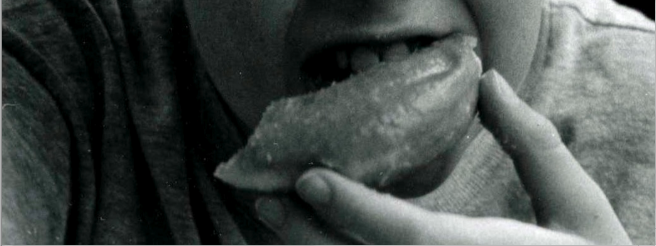
I'm overwhelmed. Last week I came down with the usual campus-wide cold. I sneezed. I sniffed. I craved oranges like never before. I was miserably sipping my best Earl Grey and eating sections of oranges, sucking the juice from the ladles in-between my fingers, when I realized that the only two things I could taste – the only two things I wanted to taste! – were both of the beloved citrus. For what would the Earl have been without his dear bergamot? (Never mind that Earl probably stole the recipe from some Chinese he met, and slapped his name on it.) It was my nepenthe.
I went nuts. I scanned my memory for the first time I could remember any inkling of such an “orange crush” – please, oh please, pardon the pun. I couldn’t help myself! It was the orange! It does strange things! Even now, I’m under its spell, just remembering the scent of orange blossoms in a courtyard in Tucson. There I was, thirteen, geeky, and alive – lit with the smell of those flowers.
 Since then I’ve had an unforgettable lemonade with orange blossom water at Hampton Chutney in Soho. I’ve toasted to girlfriends with Campari and orange blossom water sodas with slices of orange. I’ve searched for neroli, the oil from orange flowers. I've made candied orange peels with Silvie from her copy of "Fannie at Chez Panisse." And here I am, an orange-woman of the 21st Century.
And happily not one of the 18th. Apparently - thank you, OED.com - orange-women/wenches were particularly fiery, troublesome, and perplexing women to men of their times. The name refers to women who sold oranges on the street and sometimes themselves as well. So wrote, in 1711, one Mr. Addison in Spectator No. 65 ¶4, “He calls the Orange Woman, who…is inclined to grow Fat, An Over-grown Jade.” There’s something interesting here – women, their bodies, gluttony and ripe, nearly rotten, fruit. Like Eve reaching for the apple, there's an enduring, tempting and debilitating mythical affinity between the flesh of women and of fruit.
I think also of Louise Glück's poem, "Mock Orange." The phrase that makes its title refers to a shrub that resembles the citrus plant with mimicked cream-colored, fragrant blossoms. To me, the poem is about the illusion of union - between two lovers, between our myths and the lives we live. There is a bitter recognition as the speaker asks, incorporating the reader, “Do you see? / We were made fools of.”
“It is not the moon, I tell you. / It is these flowers / lighting the yard.”
Thank goodness my babies never do me wrong like that. No, thanks to Jeffrey Steingarten, I scratch and sniff (I know, gasp) at the market and they always turn out ripe and juicy, just like I had hoped.
More about the orange! I learned – thank you, Wikipedia – that the seeds of oranges are called pips. Also, the color orange is named after the orange fruit. Before the (Old) English-speaking world knew the orange, they approximated its respective color’s name as geoluhread or sort of yellow-red. How wonderful we’ve moved beyond that, because the table Anna and I painted for our living room two weeks ago would otherwise be a delightful shade of “Chinatown Geoluhread.” A better name for something you come down with after dim sum.
More and more, I've been able to find a favorite related citrus of mine, the Minneola tangelo. Half grapefruit, half tangerine. They're the ones with the incredible nipple, so tangy and sweet! (Note my woman-fruit conflation.) See here, I even held myself back long enough to catch a picture of one. I'd type more, but my fingers are too sticky.

Sunday, February 24, 2008
Banana bread
It snowed all day Friday, and I had three very ripe and willing bananas. It was clear; the time had come to make banana bread. Banana bread is incredible to me – it’s so very much like cake, and yet we call it bread. That means the stuff is as acceptable a breakfast as it is a dessert. Cake in the morning? Ingenious.

This recipe is one of the first I ever tried. It yields a moist inside flecked with bananas and a crisp crust. Just don’t cover it with tin foil while it’s still hot and run off to class for three hours like I did, or the crust will lose its crunch. You can use less butter if you want to, but oh, it is so tasty like this. And Hunter likes it, so you know it must be good.

You’ll see the recipe is in that first picture. If you click on any of the pictures, they get larger. Note that I would add 1/2 teaspoon of salt to this, and 3/4 cup sugar is plenty. One loaf, however, may not be enough.

Subscribe to:
Posts (Atom)

